Portfolio
Project 101 - Ek Sau Ek
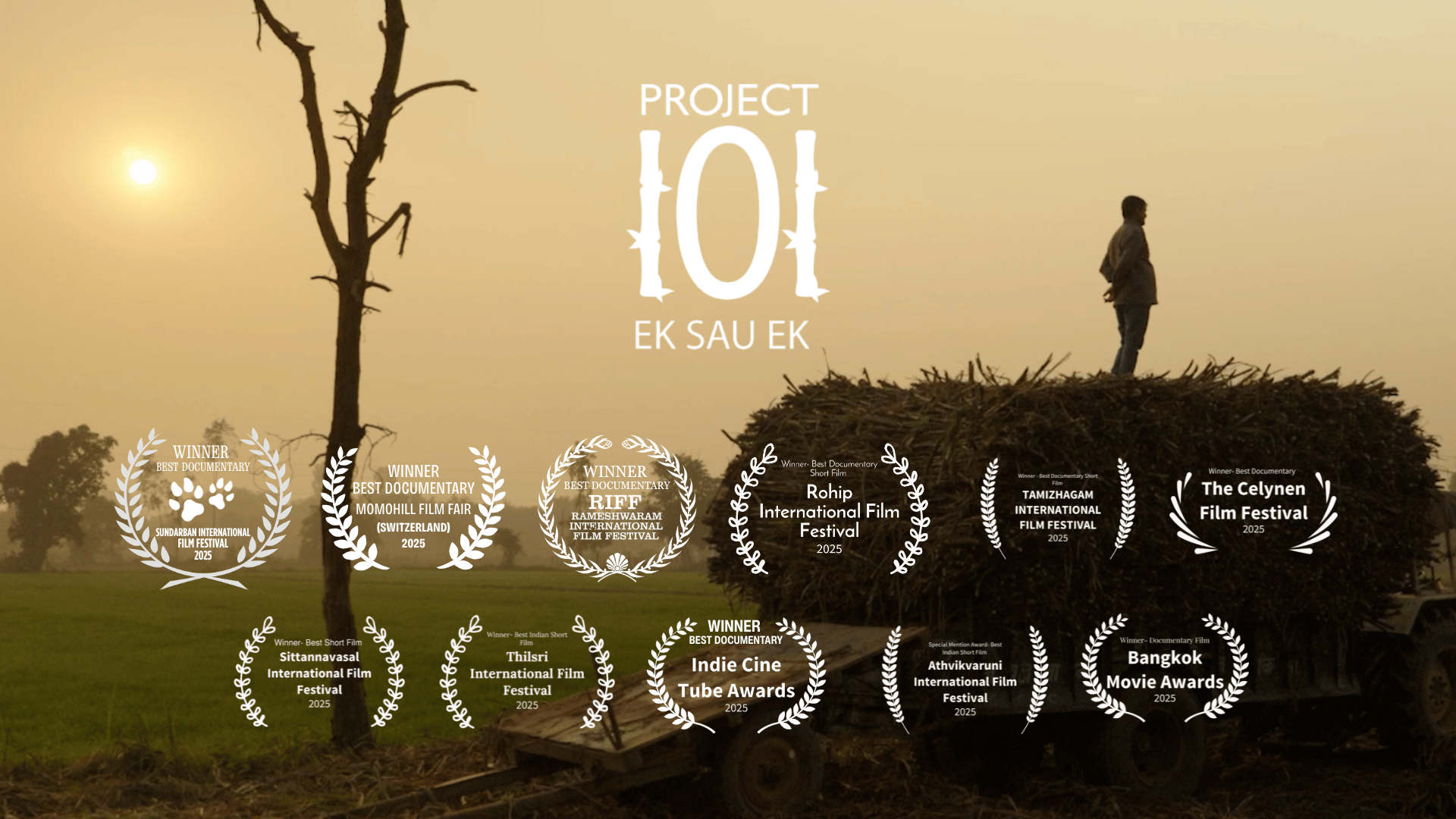
Some stories are too important to be left to data alone. One of India's largest integrated sugar manufacturers, wanted to document the human reality behind its Sugarcane Development Program, it called on GBP to go where the numbers couldn't: into the fields, into the homes, and into the lives of the farming communities across rural Uttar Pradesh.
The result was Ek Sau Ek (Project 101) -- a documentary series that travelled across multiple sugar mill zones to capture what agricultural transformation actually looks like at the ground level. Not in press releases, in people.
Sugarcane Development Program had been quietly changing lives across Uttar Pradesh for years. Tens of thousands of farming families had adopted new cultivation techniques, improved their incomes, and built more resilient livelihoods. But the story was scattered across vast geographies, multiple languages, and communities that rarely see a camera.
The challenge was not just logistical; it was editorial.
How do you honour the complexity of rural agricultural life while making content that communicates the CSR impact clearly and compellingly to boardrooms, stakeholders, and the wider public?
How do you let farmers speak for themselves without reducing them to props in a corporate narrative?
GBP embedded itself in the process from the very beginning. The work started not in an edit suite but in the soil.
Field Research First. Before scripting a single line, the team conducted on-ground research across the program's operational zones, understanding the specific realities of different communities, crop cycles, and the roles women play in sustaining agricultural households alongside men.
Story-Led, Not Data-Led. Rather than building the film around metrics, GBP built it around people. Farmers, women, field experts, and the agronomists were all given space to speak in their own voices, their own languages. The data became proof of what the stories already showed.
Multilingual Production. The films were produced with region-specific multilingual adaptations, ensuring the content could speak authentically to local audiences as well as national ones.
Cinematic Craft in the Field. The team deployed cinematic drone footage alongside intimate on-site interviews, capturing both the scale of the landscape and the texture of individual lives. The contrast between the vastness of the sugarcane fields and the close-up human stories became a central visual language of the series.